The Historical Observations
The sourced ancient observations in Le Verrier’s Uranus analysis.
Overview
The discovery of Neptune was not triggered by a single observation, but by the mathematical reconciliation of observations spanning 155 years. Urbain Le Verrier’s breakthrough relied on his decision to trust “ancient” observations (made before Uranus was recognized as a planet in 1781) that his predecessor, Alexis Bouvard, had largely dismissed as unreliable.
The Dataset
Le Verrier used both ancient observations and post-1781 normal places. The bundled transcription currently provides sourced rows only for the ancient observations, summarized below. Later illustrative rows are excluded from historical evidence.
1. Ancient Observations (1690–1771)
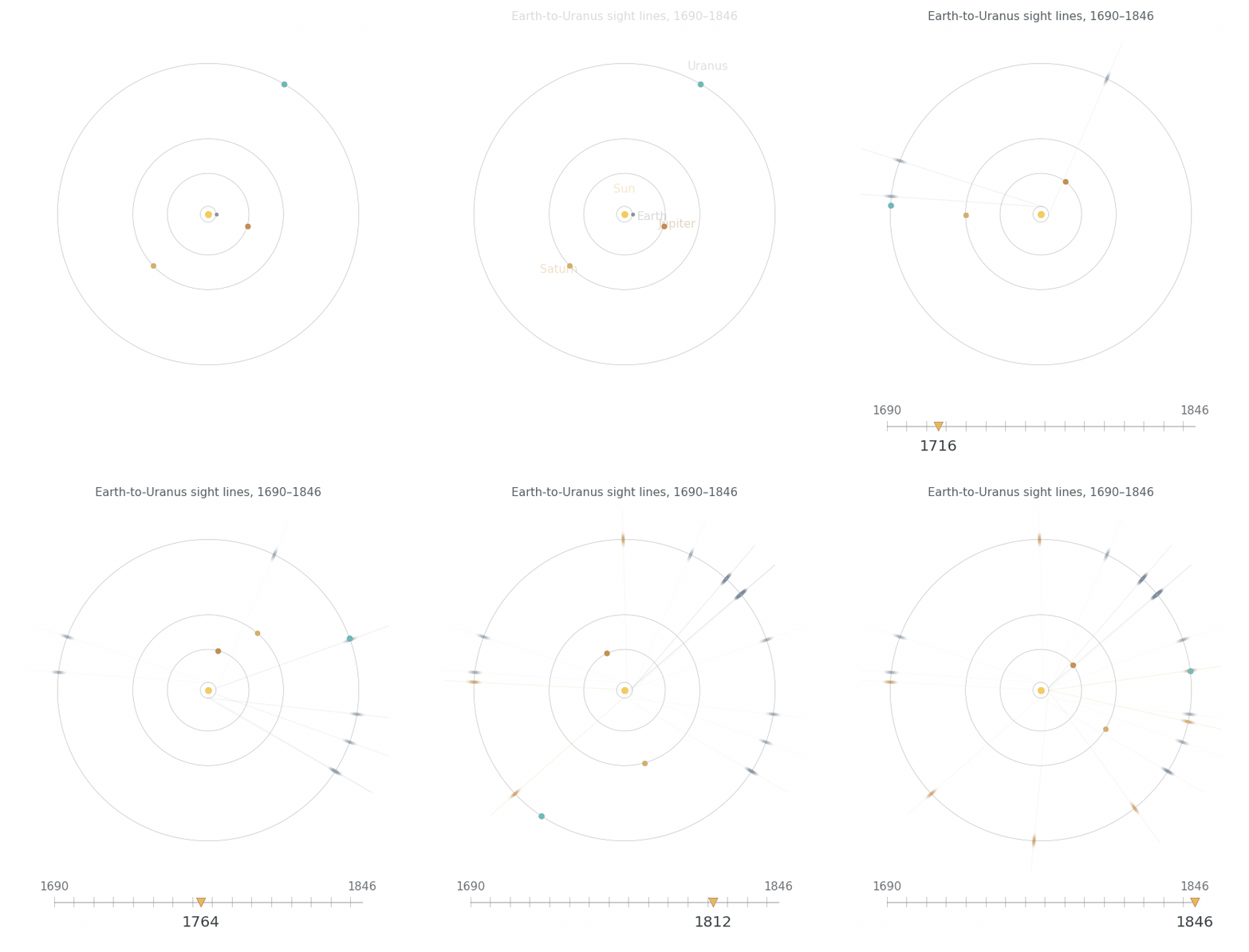
These were pre-discovery sightings where Uranus was recorded as a star. The most famous is John Flamsteed’s 1690 observation (cataloged as 34 Tauri). By re-reducing these observations using modern corrections for refraction and aberration, Le Verrier showed they were far more accurate than previously believed.
The residuals (\(O-C\)) for these observations showed a massive positive discrepancy in the late 17th and early 18th centuries, followed by a sharp negative turn by 1770.
2. Modern Normal Places (1781–1845)
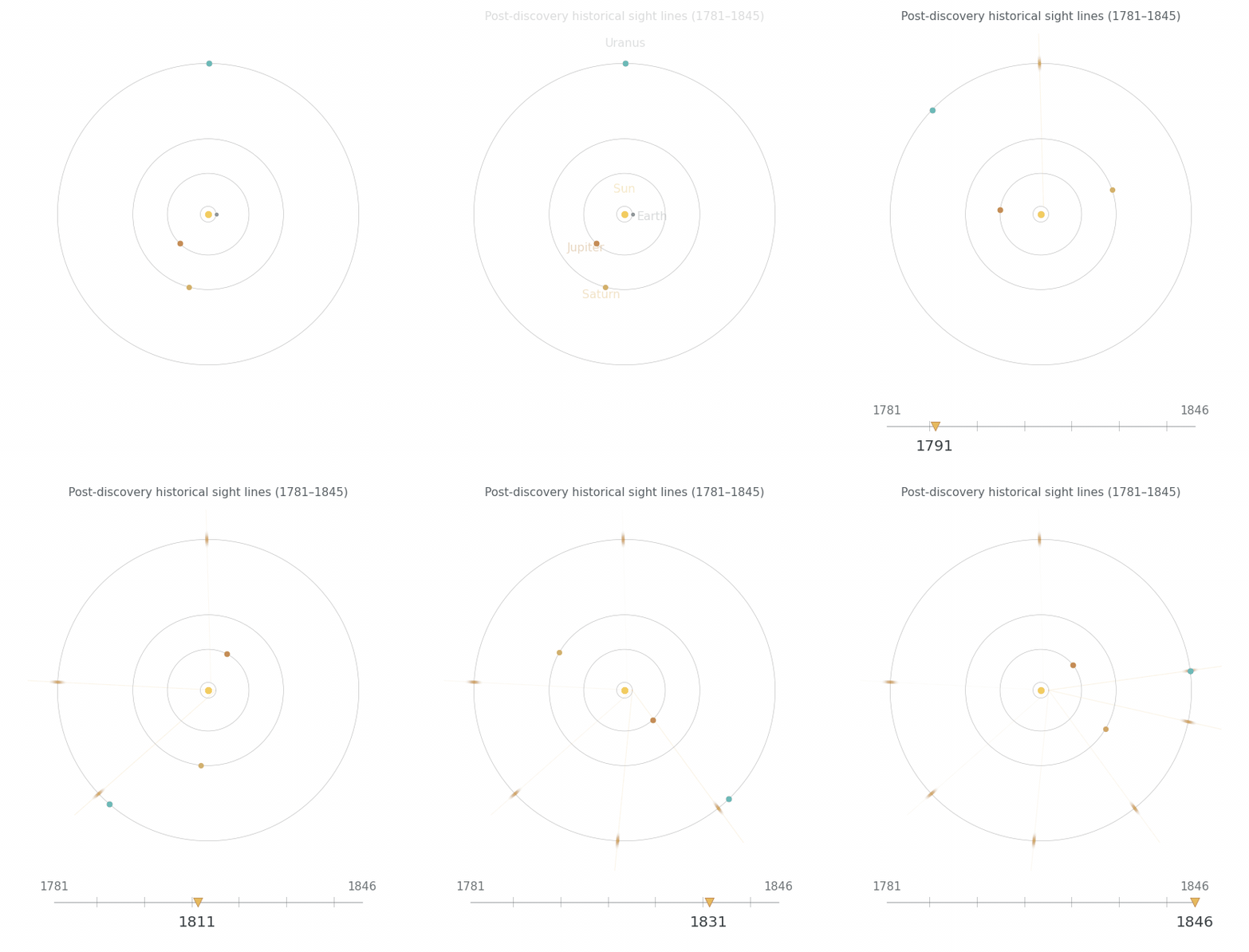
After 1781, observations became abundant. Le Verrier reduced these into “normal places”—weighted averages centered on specific years or oppositions—to smooth out observational noise. By 1845, the discrepancy between the best-fit Newtonian orbit (without Neptune) and these normal places reached over 120 arcseconds.
The repository does not yet contain a sourced transcription of those normal places. The post-discovery rows used by the animations below are illustrative geometry and are not evidence for the quoted residual trend.
Why it Matters
Without the ancient observations, the “modern” data from 1781–1845 could still be reasonably fit by an elliptical orbit with slightly modified elements. It was the inability to fit both the ancient and modern data that proved a trans-Uranian perturber was necessary.
Reference Data
The following table contains the sourced ancient residuals transcribed from Table I of Le Verrier’s 1846 memoir:
| Year | Observer | Description | Residual (\(O-C\)) |
|---|---|---|---|
| 1690 | Flamsteed | Earliest record | +67.1” |
| 1715 | Flamsteed | Pre-discovery | +110.0” |
| 1756 | Mayer | Star #964 | -4.9” |
| 1769 | Lemonnier | 6-observation series | -55.0” |
Data source: the ancient rows in data/leverrier_historical_observations.csv.
References
- Le Verrier, U. “Recherches sur les mouvements de la planète Herschel (dite Uranus).” Connaissance des Temps pour 1849 (1846).
- Grosser, M. The Discovery of Neptune. Harvard University Press (1962).
- Standage, T. The Neptune File. Walker & Company (2000).
- Kollerstrom, N. “Neptune’s Discovery: 150 Years of Controversy.” Astronomy Now (1996).